Zeugma Hyperbaric Chamber
A detailed guide to the ZEUGMA monoplace hyperbaric chamber, including pressure, oxygen delivery, fire safety and site planning.
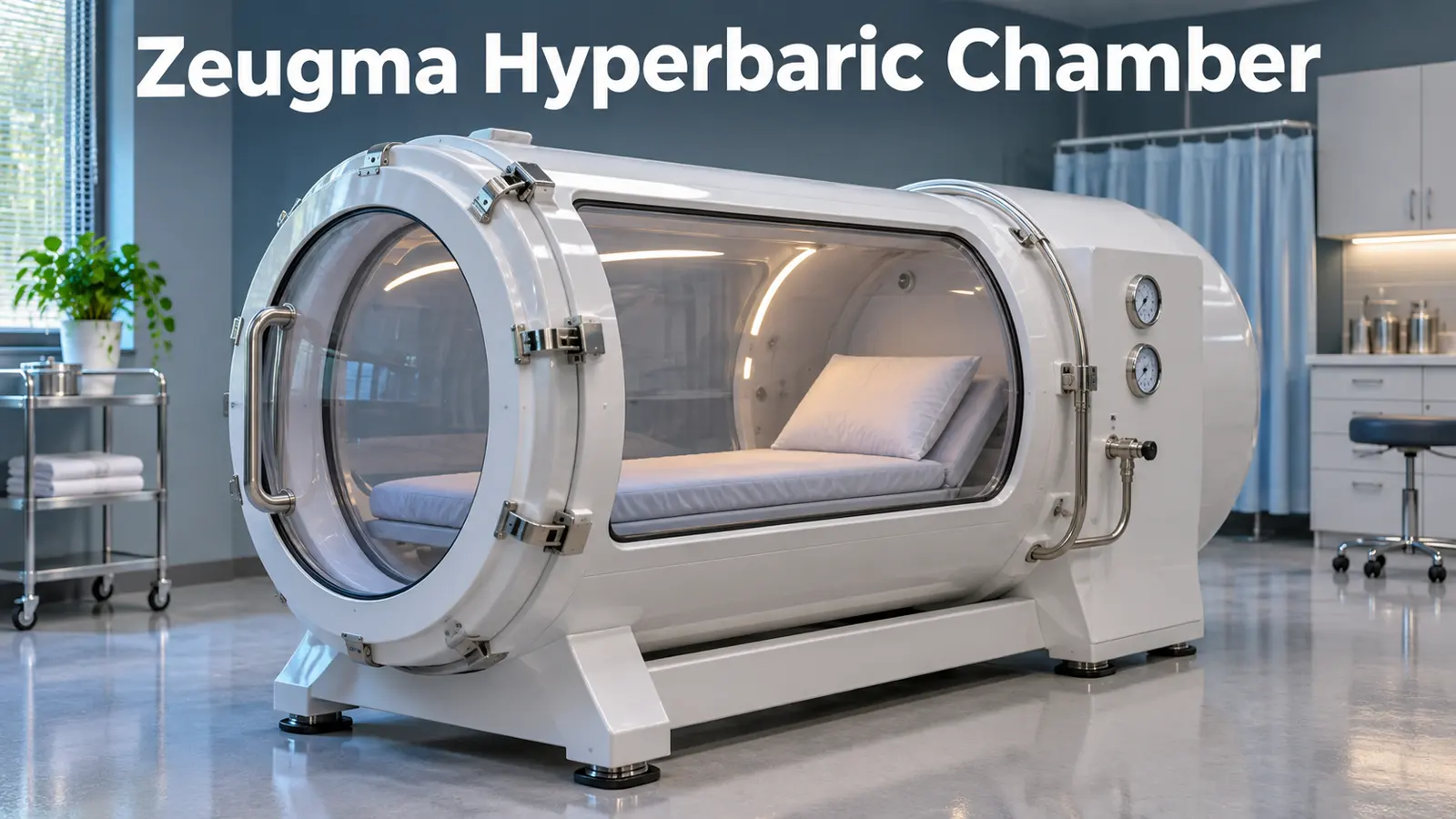
A monoplace hyperbaric chamber is a pressure vessel designed for one patient during a clinician-prescribed hyperbaric oxygen treatment. Buying one is not the same as buying a general wellness pod. The facility must evaluate clinical indications, pressure and oxygen systems, fire safety, staffing, emergency procedures, room readiness, maintenance and training. A chamber can have impressive specifications and still be unsuitable for a site that cannot operate it safely.
This article examines Regenis Life's HPO TECH ZEUGMA monoplace chamber in detail. The catalog lists a 2.4 ATA configuration with a built-in breathing system, automated session controls, patient communication and safety features. Specifications are product-page information and should be confirmed in the current technical documentation before procurement. This is a buyer and operator planning guide, not a treatment protocol or claim that hyperbaric oxygen benefits every condition.
What does monoplace mean?
Monoplace means the chamber accommodates one patient at a time. This affects throughput, staffing and emergency planning. It can offer a private treatment environment, but one device cannot serve several patients simultaneously. Facilities should estimate realistic session demand, cleaning time, maintenance downtime and staffing before deciding whether a single-seat model fits their service.
The ZEUGMA page describes a one-person chamber with transparent acrylic viewports, communication and controls accessible from inside and outside. Those features may support patient observation and comfort, but they do not replace continuous trained supervision. A patient who is anxious, medically unstable or unable to communicate needs a specific assessment before entering any chamber.
Pressure rating and configuration
The product page lists a 2.4 ATA operating configuration and says 2.0, 2.4 or 3.0 ATA configurations are available. ATA refers to atmospheres absolute, a measure of pressure relative to vacuum. A higher number is not a general measure of better treatment. The pressure used for a patient depends on the prescribed indication and protocol, while the chamber's rated configuration determines what it can safely support.
Ask the supplier for the exact model and pressure rating on the quotation, nameplate and technical file. Confirm which pressure configuration is being supplied rather than assuming the full range is available on one installed unit. The Undersea and Hyperbaric Medical Society distinguishes clinical hyperbaric treatment from low-pressure wellness exposures. The local clinical team must determine whether a proposed service aligns with recognized indications and local requirements.
The built-in breathing system
ZEUGMA is described as using a built-in breathing system, or BIBS, for oxygen delivery. This separates the question of chamber pressure from how the patient receives prescribed oxygen. A buyer should ask for diagrams and instructions covering gas supply, flow, delivery interface, monitoring, alarms, exhaust and backup. Oxygen purity and supply requirements must be specified for the installed configuration.
Never assume that any nearby oxygen source is suitable. The facility needs an engineered supply and a maintenance plan. Confirm how oxygen concentration is monitored or controlled, how leaks are detected, and what happens if supply pressure falls. These details are part of safe operation, not optional accessories to decide after installation.
Automated sessions and human oversight
The product page describes automated compression, decompression, monitoring and session logging. Automation can improve consistency and documentation, but it does not remove the need for a trained operator who understands the process and can respond to alarms. Ask to see the user interface, the editable protocol limits, operator permissions, alarm history and what data the log retains.
Session records should identify patient, prescribed protocol, actual pressure profile, oxygen delivery, interruptions and any adverse event, subject to privacy rules. The team should know how to retrieve records during a clinical review or device incident. A system that stores data is useful only if the facility can interpret and retain it appropriately.
Fire safety is a central purchasing issue
Oxygen-rich conditions increase fire risk. The US FDA's safety letter highlights serious injuries and deaths from hyperbaric-device fires and urges adherence to manufacturer instructions, fire prevention, grounding, training, monitoring and maintenance. US guidance is informative, while Indian facilities must follow applicable local requirements and the model's instructions.
Ask which clothing, bedding and personal items are permitted. Electronic devices, cosmetics and synthetic fabrics may be restricted depending on the system. Staff need a documented pre-session checklist and a way to stop a session safely. The room must have appropriate fire planning and emergency access. A chamber should not be installed before the facility has a credible fire-safety process.
Emergency depressurization and controls
The product page lists dual emergency operation, automatic pressure balancing, an intercom, emergency stop and a stated emergency depressurization capability. These are important claims to verify in the manufacturer's manual and at acceptance testing. Ask what each control does, who can use it, what alarms sound, and how a power or gas failure is handled.
Rapid depressurization is an emergency function, not a routine shortcut. It has clinical and engineering consequences and should be used only under the protocol. Train staff through supervised drills. Confirm how the patient can communicate distress and how the team will assist a person who cannot leave independently after the chamber is opened.
Patient selection and clinical indications
Hyperbaric oxygen therapy has recognized uses for selected conditions, such as decompression sickness, carbon monoxide poisoning and some difficult wounds. The exact indication, evidence and protocol require physician assessment. The UHMS indications resource is a reference point, but it does not authorize a facility to advertise every listed use without trained staff and appropriate local approvals.
Avoid presenting the chamber as a proven anti-ageing, athletic recovery or general detox treatment. A high-quality device does not turn an unsupported claim into an evidence-based service. The clinician should consider contraindications, ear and sinus pressure problems, lung conditions, medication issues and whether the patient can tolerate the chamber. Consent should explain the expected benefit and risks for that specific indication.
Site preparation and installation
Before purchase, obtain a site plan covering chamber footprint, access route, floor load, electrical supply, ventilation, gas supply, fire provisions and safe egress. The listing includes physical dimensions and ventilation information, but a buyer should request a current installation drawing for the quoted model. Check whether the device can pass through doors and whether maintenance staff can reach service points once it is installed.
Installation should include documented checks, operator training and a handover. Our medical device installation guide provides a general checklist. For a pressure vessel, the handover must also cover pressure-system documentation, emergency drills and any required certification. Do not begin patient sessions merely because the chamber powers on.
Maintenance and cleaning
Pressure seals, acrylic surfaces, communication systems, oxygen delivery, alarms, controls and ventilation need manufacturer-directed inspection. Cleaning products must be compatible with chamber materials and oxygen safety. The ZEUGMA page mentions between-session UVC disinfection, but this feature does not replace manual cleaning, infection-control procedures or inspection of surfaces. Ask exactly what UVC reaches and what it does not.
Keep a service schedule, fault log and records of parts replaced. Our maintenance checklist explains how to organize ownership. A chamber should be removed from clinical use when a safety-critical fault is suspected until qualified personnel clear it. The service contract should define response time and parts availability.
Staffing and patient monitoring
The facility needs clinicians who select patients and prescribe protocols, trained operators who run sessions, and a plan for emergency medical support. Roles should be written down. The FDA safety letter emphasizes monitoring and supervision throughout treatment. A camera or intercom does not replace an attentive operator. Staff must know how to recognize ear pain, anxiety, oxygen-related symptoms and other adverse events.
Training should include normal operation, pre-session screening, permitted items, fire response, communication, emergency depressurization and post-session documentation. Maintain competency records and repeat drills. Our medical device training records guide offers a way to document who has been trained on what.
Questions to ask Regenis and the manufacturer
Request the exact model specification, pressure rating, gas and electrical requirements, safety certifications, local regulatory documentation, installation plan, warranty and service terms. Ask who provides training, how many operators are included, how competency is assessed and how additional staff will be trained. Request the emergency procedures and maintenance schedule before signing a purchase agreement.
Compare the chamber with alternatives using the same clinical and safety requirements. A price quotation without site work, oxygen infrastructure, training and maintenance is incomplete. Avoid guaranteed outcomes or exact treatment promises in patient-facing material. The facility should be able to explain both what the chamber can technically do and which clinical services it is qualified to provide.
Frequently asked questions
Is ZEUGMA a one-person chamber?
Yes. The Regenis product listing describes a monoplace, one-person configuration. Confirm the exact quoted model and dimensions before purchase.
Does 2.4 ATA mean better results for everyone?
No. Pressure is selected for a specific clinical protocol and indication. A higher rating does not prove a general wellness benefit.
Does automation remove the need for an operator?
No. Trained staff must monitor the patient, respond to alarms and follow emergency procedures.
Is hyperbaric oxygen proven for anti-ageing?
It should not be marketed as a guaranteed anti-ageing treatment. Recognized medical indications and evidence should guide claims.
Does UVC replace cleaning?
No. Follow manufacturer-approved cleaning and infection-control procedures in addition to any automated feature.
What should be checked before installation?
Confirm site access, floor and power requirements, oxygen supply, ventilation, fire safety, regulatory documentation, staffing and maintenance support.