
EXION Device Guide
A detailed EXION device guide for facilities covering configurations, safety, training and procurement questions.
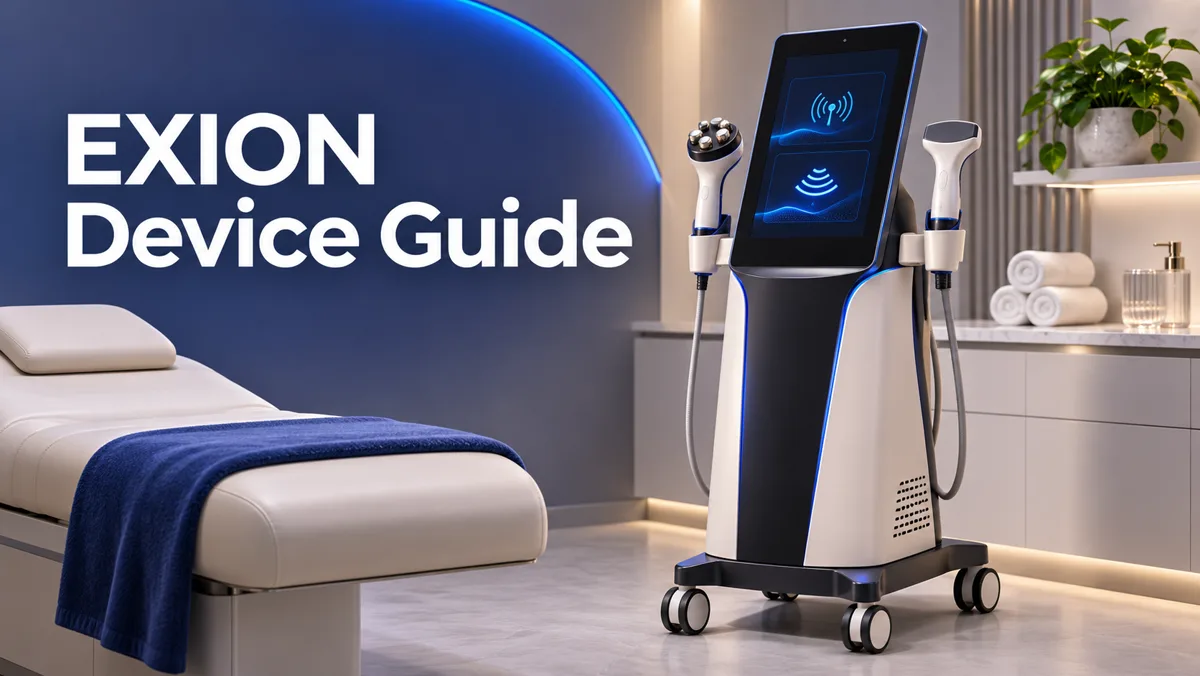
EXION is an aesthetic device platform marketed for noninvasive and minimally invasive skin and body treatments. A clinic or wellness facility considering it needs more than a list of claimed benefits. The device configuration, applicators, intended use, staff training, maintenance and patient selection all affect whether it fits a service. This guide is for facilities evaluating an EXION system and for people who want to understand the questions behind a responsible treatment offer.
What is EXION?
EXION is a platform from BTL Aesthetics with different applicators and treatment modes. Depending on the configuration, marketing materials describe uses involving radiofrequency, ultrasound and fractional radiofrequency. These are not one identical procedure. Each applicator has its own method, treatment area, contraindications, operating parameters and training needs. Before comparing offers, ask for the exact model and applicator list rather than relying on the platform name alone.
Regenis lists EXION in its equipment catalogue. That listing is a starting point for a discussion about the device; it is not a substitute for the current manufacturer instructions, local regulatory requirements or a clinical protocol. Availability of a particular applicator can change. A facility should confirm the supplied configuration and service scope in writing before planning a menu of treatments.
How do the treatment modes differ?
Noninvasive applicators apply energy through the skin surface. Fractional radiofrequency uses a different delivery approach and can have different post-treatment care needs. Energy-based treatments aim to heat selected tissue, but the depth, control and expected effects depend on the applicator and settings. It would be misleading to quote one platform-wide result or downtime period for every patient. Ask for a mode-specific explanation using the exact product manual.
A responsible consultation should distinguish the goal: texture, visible fine lines, laxity, contour or another concern. The operator should explain what evidence supports the selected mode for that goal and what degree of improvement is realistic. Manufacturer promotional statistics may come from selected study populations and cannot guarantee an individual outcome. A clinic should be able to describe the limits and alternatives clearly, including when treatment is unlikely to help.
Who should perform the assessment?
An appropriately trained clinician should review medical history, skin concerns and suitability before treatment. Important considerations may include implanted electronic devices, pregnancy, active infection, healing problems, recent procedures, medications and skin sensitivity, depending on the applicator. The exact contraindications belong to the current instructions for use. A consent form should name the planned mode, expected sensations, possible adverse effects, aftercare and follow-up route.
Facilities should avoid treating a device as a substitute for diagnosis. A suspicious skin lesion, unexplained swelling or a medical condition that needs evaluation should be assessed through the appropriate clinical pathway first. The aim is a service that fits the patient, not a patient made to fit an available machine. Staff must also know when to pause or stop a session and how to escalate an adverse reaction.
What should a facility verify before purchase?
Request the exact model number, serial number format, supplied applicators, power requirements and installation conditions. Check whether local electrical supply, room layout and ventilation meet the manufacturer specification. Ask what consumables are required, how often they must be replaced and whether they are available locally. Confirm the warranty, service response process and access to genuine parts and software updates. A quoted device without its essential applicator or training package may be a very different offer.
The Regenis installation and handover checklist explains what should be documented at delivery. The electrical safety guide adds practical questions for a facility. These general checklists complement, but do not override, the EXION manufacturer instructions. Ask the supplier to demonstrate the actual configuration you would receive, including the user interface and safety controls.
Training and service records
Device performance depends on competent use. Training should cover patient selection, contraindication screening, applicator setup, parameter selection, contact and movement technique where relevant, cleaning, troubleshooting and emergency response. Record who was trained, on which modes, and when competency was checked. A short demonstration is not necessarily enough for independent operation of every applicator. Refresher training matters when staff change or software is updated.
Keep a maintenance log with installation date, calibration or performance checks required by the manufacturer, software versions, service visits, fault codes and consumable changes. Know how to take the device out of use when a fault appears. A clinic that cannot show service records may struggle to investigate a poor outcome or unexpected interruption. Our guide to medical device calibration records provides a general framework for records, though the exact EXION requirements must come from its manual.
What should patients ask before a session?
Ask which EXION applicator will be used and why it matches your concern. Ask who will assess and operate the device, how many sessions might be considered, and what alternatives exist. Discuss common side effects, the uncommon but important risks, any downtime, and what to do if symptoms persist. Ask to see an explanation of expected results that does not imply a guarantee. Documented consent should happen before treatment, not after the applicator is prepared.
Before-and-after photos can be useful only when taken consistently and with consent. Lighting, pose and timing can change how skin appears. A facility should explain how images are stored and who can access them. Patients should not feel pressured to agree to marketing use of their photos as a condition of care. If you have a medical implant or an active skin condition, disclose it even if the area being treated seems distant from it.
How does EXION compare with a facial device?
Some facilities offer both energy-based treatments and cleansing or facial platforms. They serve different purposes and involve different assessment, safety and upkeep. Regenis also has a Preime DermaFacial detailed guide for readers comparing equipment categories. Selecting a device should begin with the service need and patient population, followed by evidence and operating capacity. It should not begin with the broadest marketing claim.
An EXION procurement decision should account for total use over time: staff time, maintenance, consumables, service access and how a device will be documented in the facility's quality system. A realistic business case does not require promising specific patient outcomes. Facilities that can explain selection and aftercare well are better placed to use the technology responsibly.
Frequently asked questions
Is EXION one treatment?
No. It is a platform with different applicators and modes. The procedure, suitability and aftercare depend on the exact configuration and selected treatment.
Does an EXION session guarantee skin tightening?
No device can guarantee an individual result. Outcomes vary with the concern, treatment plan, operator, skin and health factors. Ask for mode-specific evidence and realistic expectations.
Can anyone operate EXION after a brief demo?
Facilities should require training appropriate to each applicator, documented competency and current instructions. The required professional qualifications depend on local rules and the treatment mode.
What documents should a buyer request?
Ask for the current instructions for use, applicator list, installation requirements, training plan, warranty and service terms, maintenance requirements and applicable regulatory documentation.
What if a patient has an implanted medical device?
Tell the treating clinician before any energy-based procedure. Suitability depends on the device, treatment mode and manufacturer contraindications. Do not assume that distance from the treatment area makes it safe.
Source: BTL EXION overview.
This guide is general information for equipment evaluation, not clinical or procurement advice for a specific facility. Contact Regenis to discuss the listed configuration.