
Medical Device Calibration: What to Track and Why
A practical medical device calibration guide covering intervals, certificates, traceability, failed results and facility records.
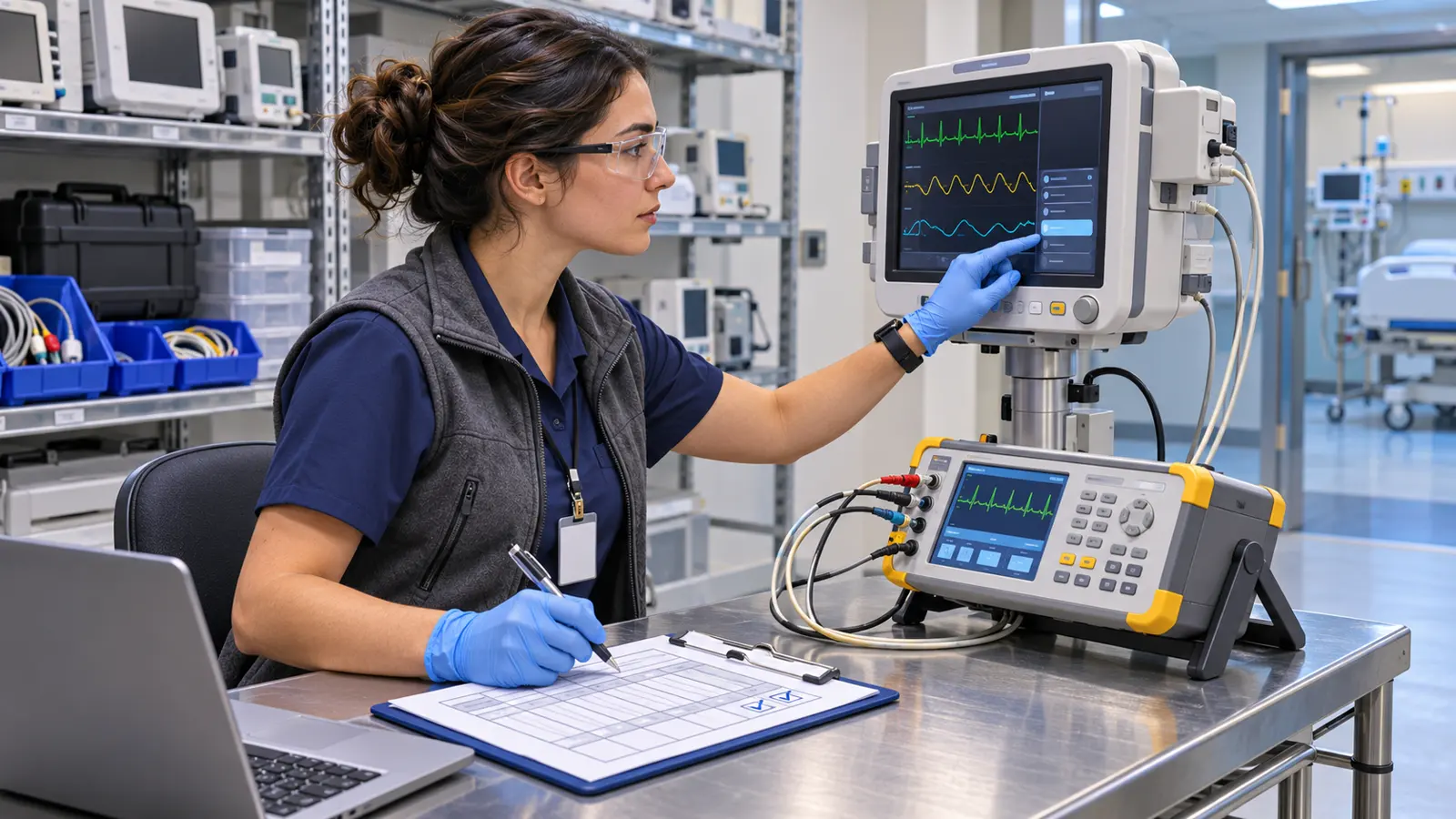
A medical device can power on, pass a visual inspection and still give an inaccurate measurement. Calibration checks how a measuring instrument compares with a known reference and, where permitted, adjusts it to meet specifications. In a clinic or rehabilitation facility, inaccurate readings can influence treatment or monitoring decisions. Yet “calibration” is often used loosely to describe any service visit. Facilities need to know which devices require it, who is qualified, and what records should come back after the work.
This guide focuses on calibration management. Our electrical safety guide covers a different risk, and our maintenance checklist covers the wider programme. A device-specific manual and applicable local requirements take priority over generic intervals in a blog.
Calibration, verification and maintenance differ
Calibration compares a device's measurement with a reference under defined conditions and records the relationship or error. Verification checks whether it meets a stated requirement. Maintenance includes cleaning, inspection, parts replacement and repair. A service technician may perform more than one of these tasks on a visit, but a receipt saying “serviced” does not prove calibration was performed.
The WHO equipment management guidance places maintenance, inventory and performance records within a broader medical-device lifecycle. Ask the supplier what work is prescribed for each model. Some devices have user checks, some require specialist calibration, and others may be replaced or tested in a different way. Do not apply the same template to every device simply because they all use electricity.
Which devices may need calibration?
Devices that measure, control or deliver a quantified output may require periodic calibration or performance verification. Examples can include weighing systems, pressure monitors, laboratory instruments, infusion equipment or therapy devices with measured output. The details differ. A device that only displays a timer has different needs from one that controls a treatment dose.
List each model, its measurement function and manufacturer recommendation. If a device is connected to another system, note whether the whole setup needs verification. A component can be accurate on its own but behave differently when paired with an accessory. The biomedical team should decide the relevant test method and acceptance criteria rather than relying on a generic “passed” sticker.
Why traceability matters
The test instrument used as a reference also needs confidence. Traceability means there is a documented chain of comparisons to recognized standards, with uncertainty considered where relevant. A calibration certificate should identify the reference equipment and its valid status. Without this, a facility may be comparing one unknown device with another unknown device.
Traceability does not mean every staff member must become a metrologist. It means procurement and biomedical teams should ask a service provider for evidence of competent methods and reference standards. If a supplier claims “NABL calibrated,” check exactly what is accredited and whether the specific measurement and range are covered. Do not use a logo as a substitute for reading the scope and certificate.
Set intervals by device and risk
Calibration frequency can depend on manufacturer instructions, usage, transport, environmental conditions, past drift and the consequences of an inaccurate reading. A device moved daily or subjected to vibration may need a different plan from one kept in a controlled room. Some devices require a check after repair even if the regular due date is months away.
The WHO medical equipment maintenance overview discusses planned inspection and maintenance. Facilities should set intervals with competent personnel and applicable standards. The goal is a defensible schedule, not simply the shortest possible interval. Over-testing can waste resources, while missed checks can create avoidable risk.
What should a certificate include?
It should clearly identify the device by model and serial or asset number, the date, method, conditions where relevant, reference instrument, measured results, uncertainty if applicable, acceptance criteria, and the person or organization responsible. If adjustment was made, results before and after adjustment can matter. The facility should be able to tell whether the device met the required limits at the time of testing.
A certificate that says only “calibrated” with no result or criteria leaves important questions unanswered. Ask what range was tested and whether it matches real clinical use. A monitor might perform well at one point yet be used across a wider range. The biomedical owner should review the report rather than filing it unread. A failed result needs a documented response.
What if a device fails calibration?
Take it out of clinical use or follow the facility's risk procedure immediately. Qualified staff should determine whether repair, adjustment or replacement is needed. The team may also need to review results produced since the last acceptable check, especially when an inaccurate reading could have affected care. That review should be proportionate to the device and clinical consequence.
Do not erase the failed result by performing an adjustment and keeping only a new passing certificate. The original finding explains the risk and helps identify drift patterns. Record who decided when the device could return to service. Our equipment downtime plan covers how to maintain service while a device is unavailable.
Installation and repair are important checkpoints
When a device arrives, confirm the model, accessories, instructions, baseline performance and any required acceptance test. A factory certificate may be useful, but the facility still needs to know whether installation affected performance. After a repair that touches a measurement or output system, ask what verification is required before patient use.
Our installation handover checklist helps organize these questions. Do not sign off simply because the screen lights up. A device can be operational yet out of specification. The handover record should state what testing was completed, what remains due and who will own follow-up.
How to build a usable schedule
Start with an inventory containing model, serial number, location, owner and the function that needs checking. Add the manufacturer's interval or a documented risk-based interval, last test date, next due date, service provider and certificate link. Use reminders early enough to book service without allowing the due date to pass. Put a clear status on equipment that is overdue or awaiting results.
A spreadsheet may be enough for a small facility if someone maintains it. Larger systems may use computerized maintenance management software. Either way, ownership matters more than the tool. Our inventory records guide describes the basic asset fields. Keep certificates attached to the asset record so they are easy to retrieve during a fault or audit.
Train users on everyday checks
Operators usually do not perform formal calibration, but they should recognize unusual readings, failed self-tests, damaged sensors and inconsistent behavior. A device that displays a plausible number can still be wrong, so compare with the patient's clinical picture and the facility's procedure. Teach staff how to report a concern and how to label a device that should not be used.
Routine user checks may include a manufacturer-specified control or reference check. Record these as instructed. Do not invent a shortcut or use a homemade reference. If a check fails, stop and escalate. Our training records article can help document who learned these steps.
Buying and service contracts
Before purchasing, ask whether calibration is required, who can perform it locally, how long it takes, what the certificate includes and whether there is downtime or a loan device. Clarify whether an annual maintenance contract includes calibration or only inspection and repair. The word “AMC” alone does not define scope. Read the service schedule and exclusions.
Ask about reference equipment, competence and report turnaround. A low-cost service that does not test the relevant range may provide little value. Equally, an expensive contract is not automatically better. Choose the scope that matches the device's clinical use and risk. Document who will review the result and authorize return to service.
Frequently asked questions
Is calibration the same as preventive maintenance?
No. Calibration is a measurement comparison. Preventive maintenance can include calibration but also cleaning, inspection and parts replacement.
Does a device need calibration every year?
Not necessarily. Intervals depend on the device, manufacturer instructions, risk and past performance.
Is a sticker enough proof?
No. Keep the full report or certificate with measured results, method and acceptance criteria.
What if a device is overdue?
Follow the facility's risk procedure. Determine whether it may remain in use, needs a check before use or must be removed from service.
Should calibration be repeated after repair?
Often, if the repair could affect measurement or output. The manufacturer and qualified biomedical team should decide what verification is needed.
Can operators calibrate devices themselves?
Only when the manufacturer provides a user procedure and the operator is trained. Formal technical calibration usually requires qualified personnel and suitable reference equipment.