
QMR-Q Physio: How to Evaluate the Device
A facility guide to QMR-Q Physio: intended use, evidence, applicators, training, safety and maintenance questions before purchase.
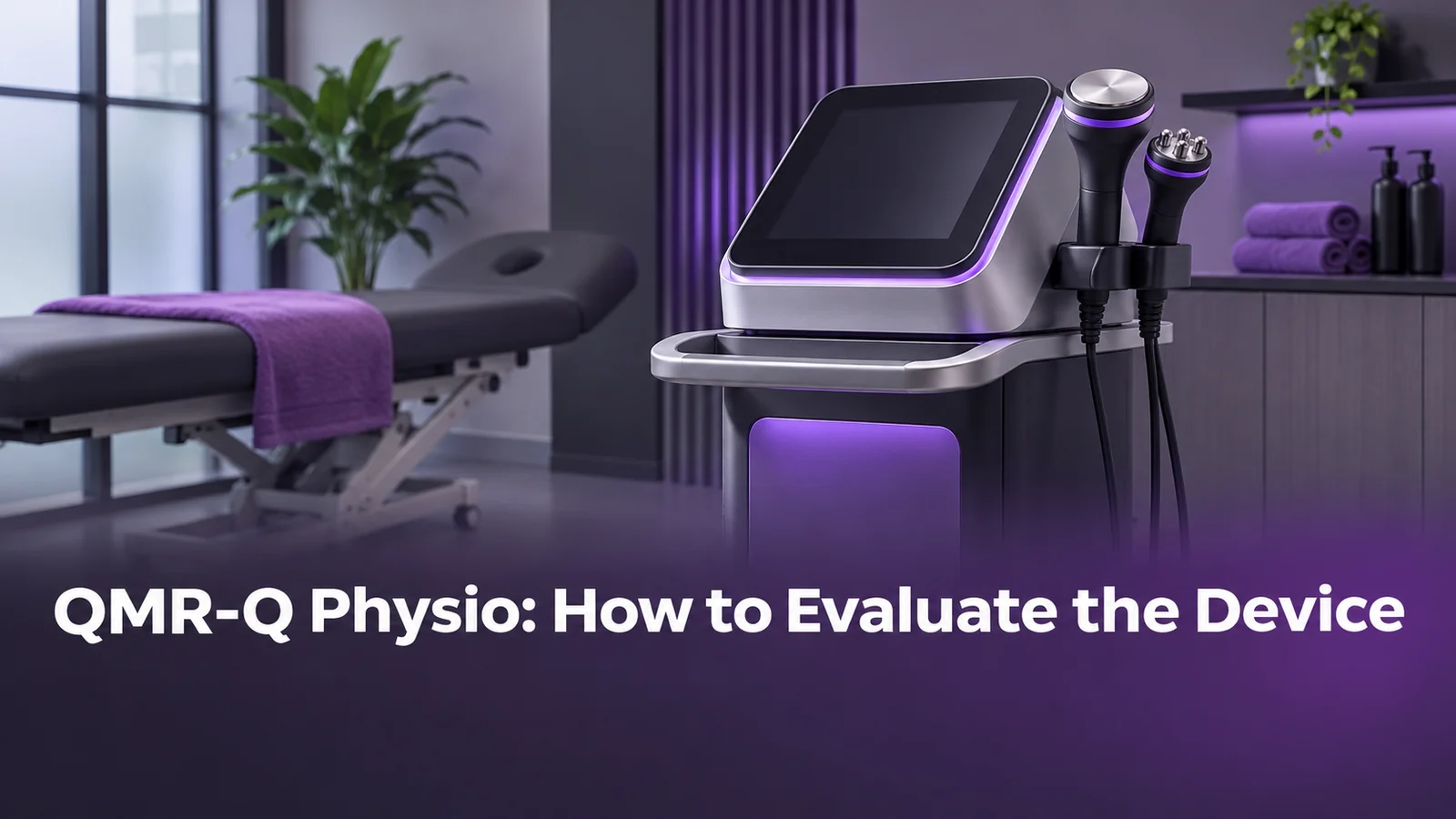
QMR-Q Physio is a physiotherapy device marketed around Quantum Molecular Resonance, or QMR. A facility considering it should understand the actual device, its accessories, operating workflow, training needs and the evidence behind proposed uses. The name of a technology is not a substitute for a documented clinical indication. The useful buying question is whether this particular system can be used safely, consistently and meaningfully for the patients and services your team actually provides.
The cover image is an illustration, not a photograph of the QMR-Q Physio unit.
Regenis Life lists QMR-Q Physio in its equipment catalogue as a Telea Medical system with a stated 4 to 64 MHz output spectrum and multiple applicator options. This article explains how to evaluate the instrument in detail. It complements our general medical device installation checklist, which covers commissioning across device categories.
What is the system designed to do?
The manufacturer describes QMR as a multi-frequency electrical energy approach used in physiotherapy and rehabilitation. The system may be configured with handpiece electrodes, adhesive electrodes and Q-Touch gloves. Those accessories can change how a clinician applies treatment, how long preparation takes and how cleaning is handled. A purchasing team should request the current instructions for use for the exact model and accessories, rather than relying on a sales presentation about the technology family.
Ask the manufacturer or distributor to specify the intended uses in the market where the device will be installed. A brochure may mention pain, edema or tissue recovery, but those words can cover very different conditions and patient groups. Regulatory classification, labeling and approved claims should be verified for the exact unit and location. A statement that a product is certified in one region does not automatically establish approval for every proposed indication in India.
What is known about clinical evidence?
The existence of published research is a starting point, not a complete answer. A randomized controlled study of QMR in osteoarthritis rehabilitation investigated pain and daily activity outcomes. Before applying that result to a purchasing decision, read the full study: how many participants were included, what comparison treatment was used, which joints and severity levels were studied, the treatment schedule, the size of the benefit and the length of follow-up. The findings cannot be generalized automatically to every pain condition or every device configuration.
Ask for studies that match the exact QMR-Q Physio model or clearly explain how the studied equipment relates to it. Look for independent replication, clinically meaningful outcomes and reporting of adverse events. A mechanism claim about cellular effects does not establish patient benefit by itself. A testimonial may illustrate a user experience but does not replace controlled evidence. A responsible facility can describe uncertainty clearly while deciding whether a device has a useful role in a supervised program.
Examine the applicators, not just the console
The console may look straightforward, but day-to-day work depends on accessories. Inspect the handpieces, leads, adhesive contacts and gloves offered with the unit. Ask which are reusable, which require consumables, how they are cleaned, how long they last and what replacement stock is needed. Request written compatibility information before ordering third-party accessories. An ill-fitting lead or improvised electrode can change the operating conditions and create safety problems.
During a demonstration, watch a clinician set up a real treatment position. Can the patient be placed comfortably? Does the cable reach without tension? Can the operator monitor the contact area and patient response? Is there a clear stop control? Does the device show settings in a way that can be documented? A short demonstration with a model case often reveals workflow constraints that a brochure cannot.
Plan patient screening and informed use
The instructions for use should define contraindications, warnings and precautions. Facilities should follow those exact instructions. Ask specifically about implanted electronic devices, pregnancy, altered sensation, damaged skin, acute illness and any other situations listed for the model. A generic statement that energy-based physiotherapy is safe is not enough. Clinical staff need a screening form and a way to document the decision for each patient.
Patients should understand what the treatment is intended to address, what outcomes are uncertain, what it may feel like and what alternatives exist. A facility should not promise tissue regeneration, cure of chronic disease or a fixed number of sessions to achieve a result without appropriate evidence. QMR-Q Physio belongs within a clinician-directed assessment and rehabilitation plan, rather than being offered as a stand-alone answer to every symptom.
Electrical, cleaning and maintenance requirements
Before installation, confirm the power requirements, grounding, room placement, cable management and any environmental limits in the manual. Arrange electrical safety checks that fit the device class and local facility policy. Our electrical safety guide explains why equipment teams should record inspection and testing rather than assuming a new unit is ready to use merely because it powers on.
Cleaning instructions should cover every patient-contact surface and accessory. Ask which agents are compatible and how adhesive or glove components are handled between patients. A process that is too slow for the expected appointment schedule can become a safety and operational problem. Staff should know how to respond to a damaged cable, unusual output, error message or patient discomfort. A suspect device should be taken out of use pending review under the facility's procedure.
Calibration or performance verification requirements must come from the manufacturer and local policy. Record the device serial number, software version, accessory inventory, installation date, service contacts and the schedule for preventive maintenance. The Regenis calibration guide provides a framework for keeping those records. Confirm who provides spare parts and what happens if an applicator fails during a busy week.
Train the staff who will actually use it
Training should include screening, setup, choice of applicator, settings, patient communication, cleaning, documentation and response to an adverse event. It should not end with a single sales demonstration. Ask for written training material and competency assessment for each operator role. Include a refresher plan for new staff and a process for software updates or revised instructions for use.
A useful clinical record should capture the indication, screening outcome, applicator, settings, duration, patient response and any follow-up outcome chosen in advance. Without consistent records, a centre cannot tell whether the system is meeting its intended purpose. The records also make it easier to investigate a complaint or compare practice across clinicians.
How to compare QMR-Q Physio with another option
Start with the clinical problem. If the facility needs a rehabilitation tool for a defined patient group, compare devices by intended use, evidence, workflow, safety requirements and total service burden. Ask whether existing physiotherapy methods already meet the need. Do not compare only the number of marketing indications or the appearance of the console. An alternative technology may have a different evidence base and different contraindications, even if both are promoted for pain.
Request a demonstration using the same patient scenario and outcome measure for each candidate. Record what staff liked and where they struggled. Confirm the exact device model, accessories and service agreement in writing. The final decision should be made jointly by clinicians, biomedical or equipment staff and operations, because each sees a different part of the risk.
Regenis Life can provide product details and help facilities assess installation and support through its equipment catalogue. This article is procurement education, not device-specific medical instructions or a guarantee of clinical results. Always follow current manufacturer documentation and applicable local requirements.
Frequently asked questions
Is QMR-Q Physio the same as ultrasound or shockwave therapy?
No. These are different technologies with different hardware and operating principles. Compare intended uses and evidence for the particular device rather than assuming one can replace another.
Does a published QMR study prove the device works for every pain condition?
No. A study applies to its participants, treatment protocol, comparison and outcomes. Other conditions and devices need their own evidence.
What documents should a facility request before purchase?
Ask for the current instructions for use, regulatory documentation for the installation market, electrical requirements, accessory list, cleaning instructions, training plan and service terms.
Can any staff member operate it after a brief demonstration?
The facility should define qualified operators and document training and competency. Screening and response to patient discomfort are part of operation, not optional extras.
What should be recorded after each session?
Record the indication, screening result, applicator, settings, duration, response and any adverse event or follow-up measure required by the facility's protocol.