
Medical Equipment Electrical Safety: A Facility Guide
A facility guide to medical equipment electrical safety, inspection, qualified testing, fault response and maintenance records.
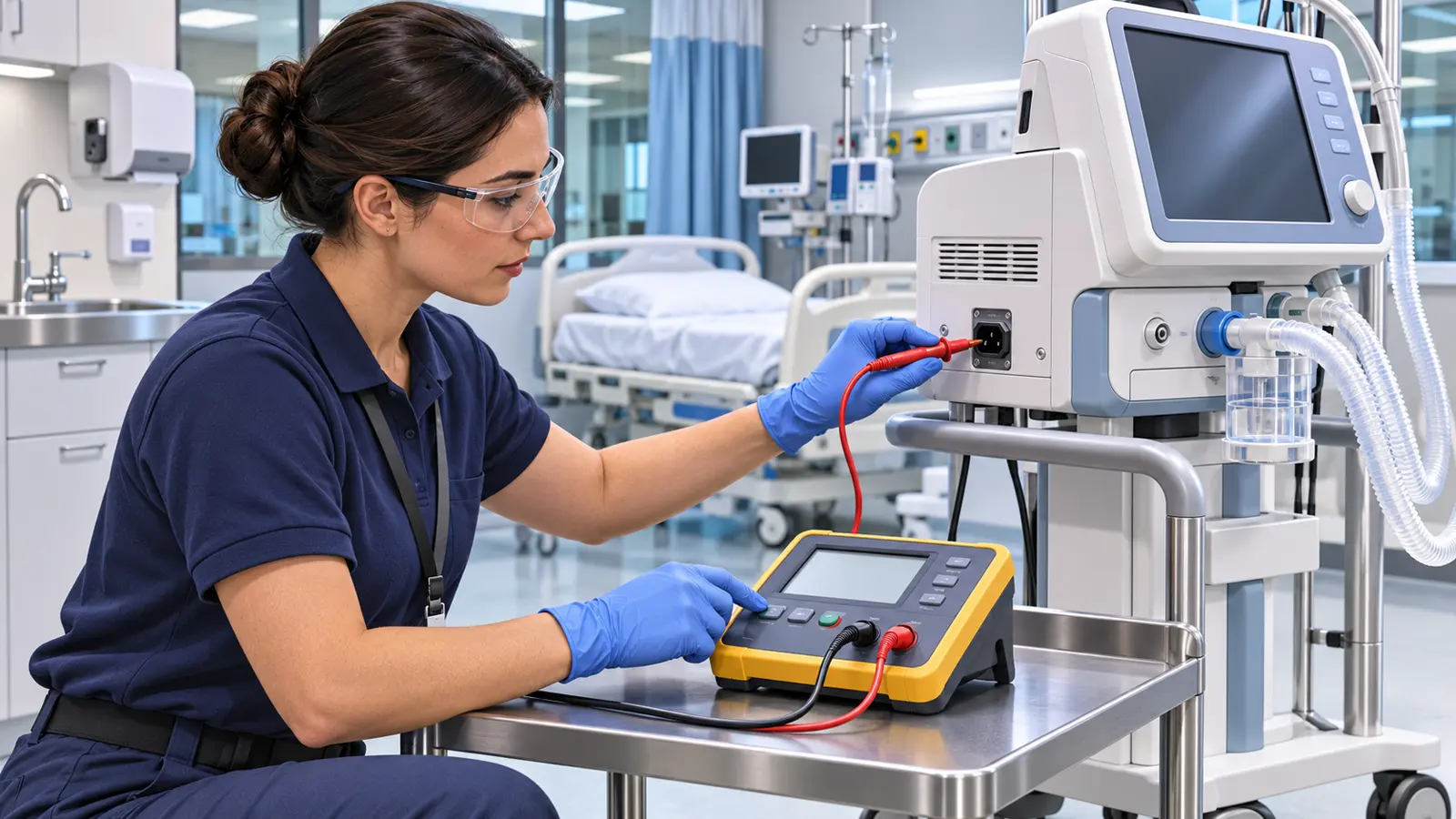
Electrical safety is easy to overlook when a medical device turns on and appears to work. A damaged cord, loose plug, liquid spill or incorrect replacement power supply can create a risk to patients and staff. In healthcare settings, the consequences can be serious because patients may be connected to equipment or unable to move quickly. A facility needs a practical process for inspection, testing, incident response and records.
This guide is for buyers and facility managers planning the electrical safety of medical equipment. It is not an instruction to open or repair a device. Only qualified personnel should perform technical tests and repairs under the manufacturer's instructions and applicable local requirements. For a broader maintenance framework, see our medical equipment maintenance checklist.
Start with a complete equipment inventory
You cannot maintain what you have not identified. Record each device's manufacturer, model, serial number, location, purchase or installation date, intended use, power requirements and service contact. Note whether the device is used near a patient, moved between rooms or connected to another powered system. These factors affect how it is inspected and managed.
Our equipment inventory guide explains the core record. A unique facility asset number helps staff connect a fault report to the correct device. If a device is rented or supplied under a service contract, record who is responsible for electrical checks. Do not assume the vendor has tested it recently without documentation.
What a daily visual check can catch
Before use, staff can look for obvious damage: frayed cable insulation, bent pins, cracked cases, loose plugs, moisture, discoloration or a smell of overheating. They should also check whether the power adapter is the one specified for the device. Visual checks do not require opening the case. If something appears unsafe, stop using the device, label it clearly and follow the facility's reporting route.
The goal is not to turn every clinician into an engineer. Staff need a short, teachable rule: inspect the visible parts they handle and report changes promptly. A device that still powers on may still have a hazardous defect. Do not cover a damaged cable with tape and return it to patient use.
Why formal electrical testing may be needed
Qualified biomedical or electrical personnel may use appropriate test equipment to check protective earth, leakage current, insulation and other characteristics relevant to the device and local requirements. The exact procedure depends on device classification, intended use and manufacturer instructions. A generic online testing interval or pass value should not be applied to every device.
The WHO medical equipment maintenance overview explains that a maintenance programme should be planned around equipment and risk. Facilities should use applicable Indian regulations and recognized technical standards where relevant, with competent personnel documenting the method and result. A test sticker is useful for identification, but the underlying report is the evidence.
When should equipment be checked?
Consider an acceptance check at installation, scheduled preventive maintenance, inspection after repair, and review after damage, liquid exposure or an electrical incident. A device moved frequently or used in demanding conditions may need closer attention than one kept in a controlled room. Manufacturer instructions and the facility's risk assessment should guide intervals.
If a new device is delivered, do not assume its factory test covers the installation context. Verify accessories, power supply and instructions during handover. Our installation and handover checklist can help ensure the device is identified and staff are trained before patient use.
Power adapters and extension leads
An adapter that fits physically is not necessarily compatible. Voltage, polarity, current capacity, connector design and safety certification matter. Replacement parts should match the manufacturer's specification. Unapproved chargers can cause malfunction or electrical hazards. Keep the original adapter identifiable and check it as part of the device.
Avoid improvised extension lead chains around patient care areas. Cords across walking routes cause falls, and overloaded outlets can overheat. Ask a qualified facilities professional to assess the room's power provision if equipment needs have grown. A permanent change to electrical infrastructure is safer than a collection of temporary fixes that nobody owns.
Water, cleaning and electrical hazards
Cleaning is essential, but liquids and powered equipment require care. Follow the manufacturer's instructions about switching off, disconnecting, approved products and drying time. Do not spray liquid directly into vents or connectors unless the instructions explicitly permit it. Cleaning staff should know which surfaces they may wipe and which require clinical or technical handling.
If a spill reaches a powered device, remove it from use and seek technical assessment according to the facility plan. Do not test it by turning it on repeatedly. Our clean equipment before service checklist covers how to prepare equipment for safe handling by a technician. Infection control and electrical safety need to work together.
What to do after a shock or suspected fault
Protect the person first. Follow local emergency procedures for an electrical injury or patient deterioration. Stop using the device, make it safe only if this can be done without exposing anyone to further danger, and prevent others from using it. Record what happened, including device identity, location, people involved and any visible condition. Notify clinical leadership and biomedical support promptly.
Do not reset or repair the device and return it to service before investigation. The cause may involve the equipment, power outlet, accessories or interaction with another system. A qualified team should determine the appropriate checks and document clearance. The facility's incident process should also consider whether another device of the same model needs review.
Records that make the programme auditable
Keep the device inventory, acceptance record, maintenance schedule, test reports, repairs, fault reports and return-to-service authorization together. A clear record should say who performed a check, when, with what method, and what action followed. It should not simply say “OK.” If an external vendor performs testing, request a report with the device serial number and findings.
Training records matter too. Staff need to know visual warning signs, how to label and isolate a faulty device, and whom to call. Our medical device training records guide suggests what to document. Review the process when new equipment is added or a recurring fault appears.
Buying with electrical safety in mind
Before purchase, request technical specifications, instructions for use, power requirements, approved accessories, warranty and local service arrangements. Ask how electrical safety is verified at installation and after repair. A supplier should be able to explain the device's intended environment and maintenance needs. A vague statement that the product is “hospital grade” is not a substitute for documentation.
Consider whether the facility has the sockets, power backup and trained staff the device requires. A purchase may be clinically useful yet impractical in the current room. Include these needs in procurement planning instead of discovering them after delivery. Compare suppliers on service response and documentation as well as device features.
A simple facility workflow
Assign an owner for each device group. At receipt, record and inspect it, check the supplied accessories and complete the required acceptance steps. Before routine use, staff perform visible checks. At scheduled intervals, qualified personnel carry out preventive maintenance and technical testing appropriate to the device. After any fault or repair, obtain documented clearance before reuse.
Review incident trends at least periodically. Repeated cable damage might point to poor storage or a room layout problem. Repeated missing adapters might mean accessories need labels. Fixing the underlying workflow often prevents more faults than repeatedly repairing the same symptom. A good programme is practical enough for staff to follow every day.
Frequently asked questions
Does a working device automatically pass electrical safety?
No. A device may power on despite damaged insulation, leakage or an unsafe accessory. Use visual checks and qualified testing as appropriate.
Can a nurse perform an electrical safety test?
Clinical staff can report visible concerns. Formal technical testing should be performed by trained, qualified personnel using suitable methods and equipment.
How often should a device be tested?
There is no universal interval for every product. Follow manufacturer instructions, applicable requirements and a facility risk assessment.
Is a test sticker enough documentation?
No. Retain the report showing the device, method, date, result, person responsible and action taken.
Can we use a compatible-looking adapter?
Use only an adapter that meets the manufacturer's specification. Matching the plug shape alone is insufficient.
What happens after a device causes a shock?
Attend to the person, isolate the device, report the incident and have qualified personnel investigate before it returns to use.