
Medical Device Training Records: What to Document
A facility checklist for medical device training records, competency checks, refresher triggers and staff authorisation to use equipment.
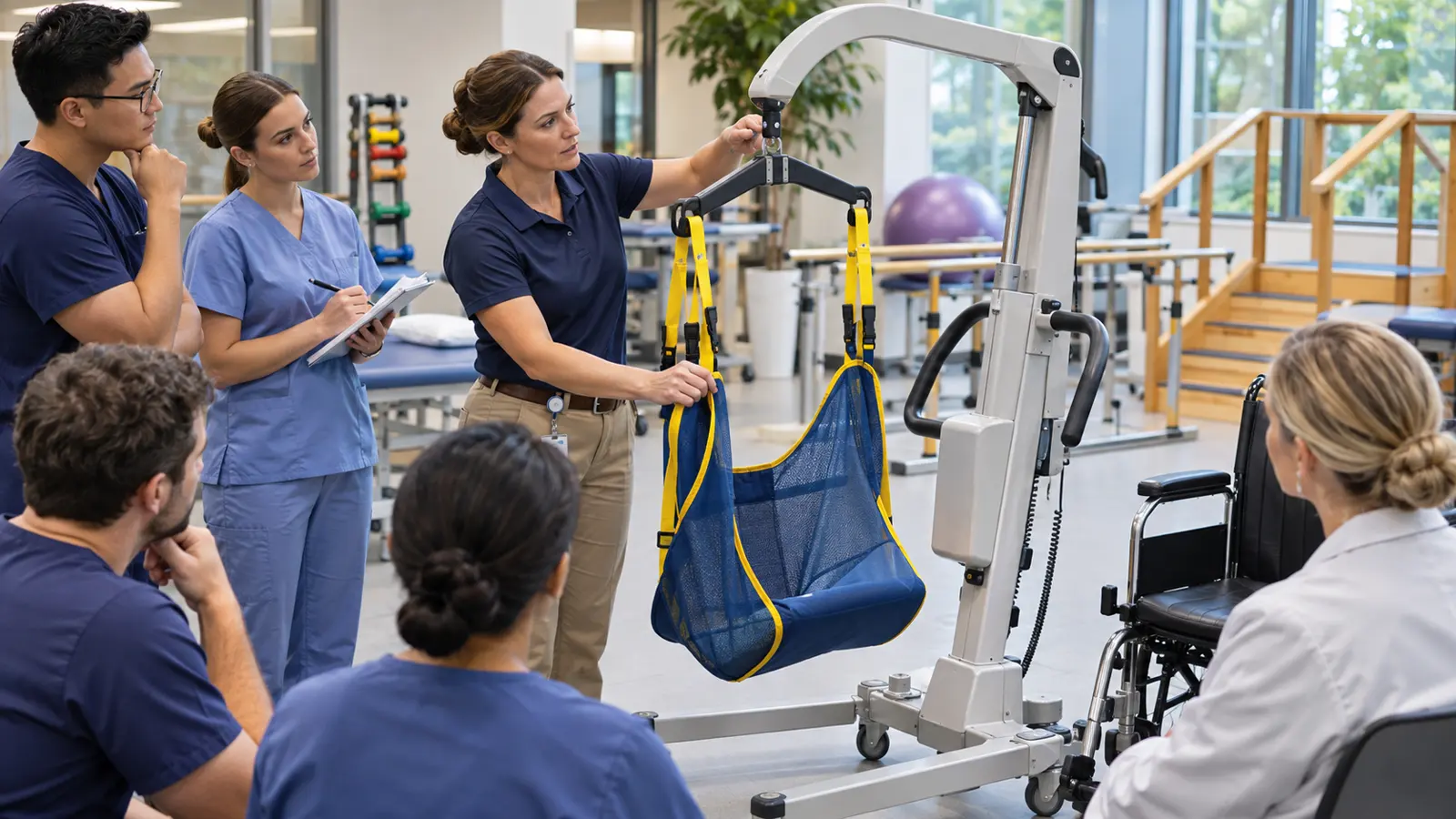
A new rehabilitation device has been installed, and several staff members watched the supplier's demonstration. Three months later, a replacement therapist joins and the team cannot tell who was trained, who practised the emergency stop, or which version of the instructions was used. This is a training record problem, not merely a paperwork problem. A clear record supports safe use, helps new staff learn consistently, and makes refresher training easier to plan.
This article offers a medical device user training record checklist for facilities using rehabilitation, diagnostic, and wellness equipment. Our installation and handover guide addresses receiving a device and transferring it into operations. Here the focus is the people who use it throughout its life. Adapt the record to your equipment, local rules, manufacturer instructions, and facility policies.
Why record training after installation?
Installation training is often a one-time event, while staffing and device software change over time. A single sign-in sheet proves attendance at most; it does not show that a person can set up the device, select the right programme, recognise contraindications, respond to an alarm, and clean patient-contact parts. Training records should support a practical decision: who is authorised to operate which equipment and what follow-up is needed.
The WHO health technology management publication places training for safe use within the equipment life cycle, alongside inventory and maintenance. WHO also notes that equipment can be underused when staff lack the necessary skills. For a facility, this means training belongs in the operational plan from procurement through replacement, not only on the installation day.
Start with a device and role matrix
List the device model, serial number or group of equivalent units, software version where relevant, and the roles permitted to use it. A physiotherapist may need full operation training, while reception staff only need to know when a unit is unavailable. Maintenance technicians may require a separate technical course. A clinical lead may need to interpret results without operating the equipment.
Our equipment inventory guide explains why a stable device ID matters. Link the training record to that ID. If the facility has several models that look similar but use different settings or safety steps, record competency separately. “Trained on treadmill” is too vague when one model has a harness and another does not.
Record the training content, not just the date
A useful session record includes the trainer's name and qualifications, participants, date, device ID, instruction version, and topics covered. Topics may include intended use, patient selection, contraindications, setup, calibration or pre-use checks, normal operation, emergency stop, alarms, cleaning, documentation, and how to report a fault. The exact list changes by device. Use the manufacturer’s instructions as the backbone rather than a generic checklist copied across all technologies.
Hands-on practice is especially valuable. A person may understand a slide deck but still need to practise fitting a strap or responding to an alarm. The WHO equipment training guidance describes theoretical and practical user training with the equipment configuration. A facility can translate that principle into short demonstrations and observed practice.
Attendance is different from competency
Competency means the user can carry out the relevant tasks correctly under the conditions they will face. Depending on risk, the check may be an observed setup, a simulated alarm, a case discussion, or supervised patient use. Record what was observed, the assessor, the outcome, and any limitation. If a person needs more training, make the next step explicit rather than marking them simply “failed.”
The assessment should be proportionate. A high-risk device needs more rigorous evidence than a low-risk accessory. Do not claim that one brief demonstration makes every new employee fully competent. Conversely, avoid a complex form that no one can keep current. The purpose is a reliable authorisation decision with evidence behind it.
Include safety and infection prevention tasks
Training should cover what to do when equipment behaves unexpectedly: stop use, protect the patient, record the fault, and follow the facility's escalation route. Our medical equipment downtime plan shows how the operational response continues after the initial stop. For some devices, staff should also practise an emergency release or backup procedure.
Cleaning is another essential task. The person using the device should know which patient-contact parts are cleaned between sessions, which method is approved, and when specialised reprocessing is needed. Our cleaning before service guide covers the service handoff, but routine patient-to-patient cleaning needs its own task training. A device can be technically functional and still unsafe to share if cleaning is misunderstood.
When should staff be retrained?
Retraining may be needed when software or hardware changes, the manufacturer updates instructions, a new accessory is introduced, a near miss reveals a gap, a staff member has not used a device for a long time, or a new protocol is adopted. Set a review interval appropriate to the device and local policy, then add event-triggered refreshers. A fixed annual signature alone may miss an important update halfway through the year.
When the manufacturer issues a safety notice or recall, record who reviewed it and whether affected users were briefed. Our device recall response checklist explains the facility response. The training file should show how a changed instruction reached the people actually using the device.
Handling new starters and temporary staff
New and temporary staff can be competent clinicians but unfamiliar with your exact model, settings, or local workflow. Provide supervised orientation before independent use. A pre-existing certificate from another facility may be relevant, but it does not necessarily cover a different device version or local emergency process. Record what prior training was accepted and what local tasks were still checked.
Keep the authorisation list accessible to the person scheduling sessions. If an untrained operator is assigned because the roster did not show device competency, the training record did not function operationally. Avoid putting sensitive staff data on public-facing equipment labels. The facility can maintain a controlled staff matrix that simply shows current authorisation status to those who need it.
How to store and review the record
A spreadsheet or dedicated system can work if it is secure, current, and easy to search. The record should link the person, role, device model, training date, trainer, competency check, and next review trigger. Keep older versions when instructions change so the facility can see what training applied at a past date. Record who updated the file and when.
Make a monthly or quarterly review practical: new staff without assessment, devices with no assigned trainer, expired authorisations, and software changes without refreshers. The WHO medical equipment management guidance highlights the need to connect device information across its life cycle. A training record becomes useful when it informs scheduling, maintenance, and safe use, not when it sits in a folder nobody opens.
A compact training record template
Include these fields: device name and ID; intended use and location; manufacturer instruction version; participant name and role; trainer and assessor; session date; topics covered; observed tasks; result; restrictions or supervision required; next review trigger; and sign-off. Where several devices share a model, specify whether the assessment applies to all units or only one configuration. Add a place for a short note on refresher training.
The form should also point to the location of the current instructions and the fault reporting pathway. Do not paste a full patient record or unnecessary personal information into it. Patient outcomes belong in the clinical record, while the training record establishes staff readiness. If a safety incident occurs, preserve relevant records under the facility's incident policy.
Common gaps to correct
A vendor attendance sheet without practical assessment is one gap. A training session that omits cleaning or emergency stop is another. Facilities also forget to update records when the same device gains new software, when a unit moves to a different site, or when a trained employee leaves. A quick audit can reveal these gaps before they affect a patient.
The right response is usually to improve the workflow, not add more signatures for their own sake. Assign a record owner, make updates part of new starter onboarding and device changes, and check that scheduling uses current authorisation. Good records support a safe routine that staff can actually follow.
Frequently asked questions
Is a supplier's attendance certificate enough?
It shows attendance, but may not demonstrate competency for the tasks and risks at your site. Add an appropriate practical check and local orientation.
Should every device have the same training checklist?
No. Use the manufacturer's instructions and the device's clinical risk to define tasks. A shared record format can still keep administration simple.
Who should assess competency?
A qualified person who understands the device and the tasks being assessed, according to facility policy. Technical and clinical skills may require different assessors.
When should a refresher happen?
Set a local review interval and retrain after meaningful changes, incidents, long gaps in use, or new instructions. One fixed date does not cover every trigger.
Should the training record contain patient names?
Generally no. Keep patient care details in the clinical record and use the training file for staff, device, and competency information.
This operational guide does not replace manufacturer instructions, clinical governance, or applicable local requirements.